What to Pack for a 5-Day Snowboarding Trip if Youre a Beginner
Published July 21, 2026 · 8 min read · Updated July 21, 2026
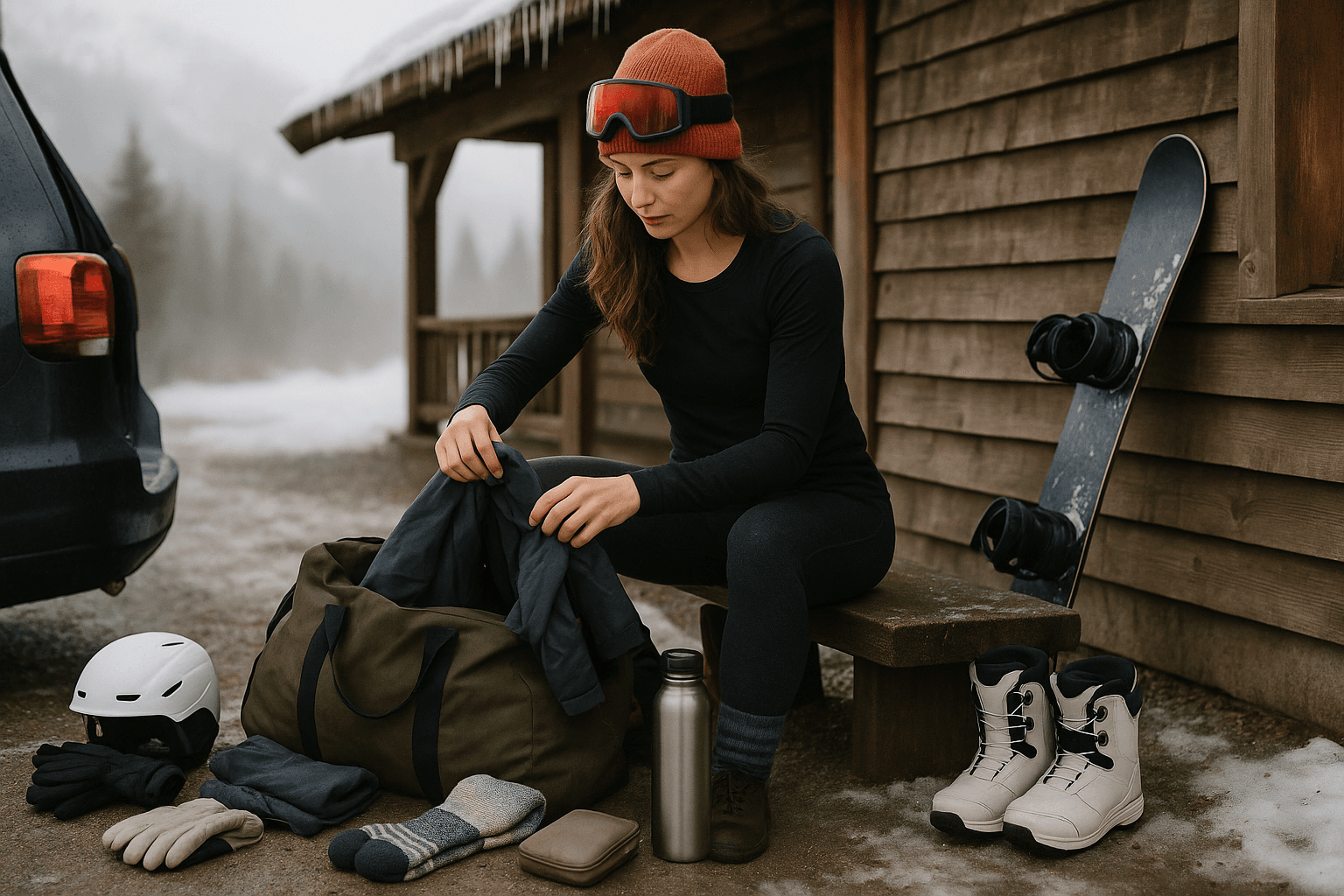
Most beginners show up to the mountain with either a suitcase that could survive a transatlantic move or a backpack that's missing three critical items. Both scenarios will make your first snowboarding trip miserable in ways you won't fully anticipate until you're standing at the base of a run, soaking wet and shivering, wondering why nobody told you about base layers.
Here's what you actually need for five days on the mountain — no fluff, no "pack a positive attitude" nonsense.
Gear First: What to Rent vs. What to Own
Before you pack a single thing, make this decision: rent your board, boots, and helmet from the resort or a local shop for your first trip. Snowboard gear is expensive, sizing is tricky until you know your preferences, and beginner boots feel completely different from intermediate ones. Renting lets you try different setups without committing hundreds of dollars to equipment you might outgrow in a season.
That said, a few things you should never rent:
- Goggles — Rental goggles are scratched, fogged, and have been on approximately 4,000 stranger's faces. A decent pair runs $40–$80 and makes a massive difference in visibility on flat-light days.
- Wrist guards — The single most common beginner injury is a broken or sprained wrist from catching yourself in a fall. Rent everything else, buy these. $20 at REI or Amazon.
- Socks — Obvious, but worth saying: thick, wool-blend snowboard socks (one pair per day, minimum). Not cotton. Never cotton. Damp cotton against your foot inside a tight boot is a blister factory.
If you want to bring your own helmet because the idea of a rental one bothers you — fair. But it's not strictly necessary for a first trip if the rental shop has good inventory.
Clothing: The Layering System That Actually Works
Snowboarding clothing is all about managing a strange paradox: you're outside in freezing temperatures, but you're also working hard enough to sweat. Get this wrong and you'll be either drenched in your own moisture or so cold you can't focus on learning.
The system is three layers:
1. Base layer (against your skin) Merino wool or synthetic moisture-wicking material. This pulls sweat away from your body. Pack two tops and two bottoms for five days — you'll hand-wash one set midweek. Brands like Smartwool or Icebreaker are excellent, but even Costco's Kirkland merino works fine.
2. Mid layer (insulation) A fleece or lightweight down jacket. This is what keeps you warm when you stop moving. On warmer days, this might come off entirely. Bring one or two fleece pullovers.
3. Outer layer (shell) Your snowboard jacket and pants. These need to be waterproof and breathable — look for Gore-Tex or similar. If you don't own a proper snow jacket, this is worth renting or borrowing before you buy. A soaked outer layer on day two of five is genuinely miserable. Check the waterproof rating: 10,000mm is the minimum you want; 20,000mm is better.
A few things beginners consistently forget:
- A neck gaiter or balaclava — wind at speed is brutal on exposed skin
- Waterproof gloves or mittens (mittens are warmer; gloves give you more dexterity — beginners often prefer mittens because you fall more and your hands hit the snow constantly)
- Helmet-compatible beanie for wearing at the lodge or on the lift when you want extra warmth under your helmet
Pack two complete outfits for the mountain. Rotate them. Hang the damp one to dry overnight — most mountain lodging has good heat, and gear dries faster than you think.
The Apres-Ski Bag: Life Off the Mountain
You'll spend maybe 6 hours a day actually riding. The other 18 hours matter too, and beginners especially need to factor in recovery time — your legs, hips, and ego will need it.
For off-mountain life, pack:
- Comfortable, warm casual clothes — think thick joggers, hoodies, a decent fleece. You're not going to a fashion show, but après-ski at a lodge has a casual cool vibe worth showing up for.
- One nicer outfit if you're planning a dinner out. Mountain towns often have surprisingly good restaurants.
- Slip-on shoes or boots — you'll be taking your snowboard boots on and off all day, and the last thing you want after that is laces. UGGs, Blundstones, or even Crocs with thick socks are mountain staples for a reason.
- Recovery tools: ibuprofen (you'll thank yourself), a small foam roller or a lacrosse ball for your calves and feet, and electrolyte packets. Five days of physical activity at altitude hits differently than the gym.
Don't underestimate altitude if you're coming from sea level. Hydration matters more than usual, and some people feel genuinely off for the first day or two. Drink water constantly, limit alcohol the first night, and sleep as much as you can.
The Bag Itself: What Container to Actually Use
This is weirdly controversial among travelers but the answer for a ski/snowboard trip is pretty clear: a large duffel bag (around 90–100L) beats a rolling suitcase. Snow, slush, and mountain shuttle buses are not kind to wheeled luggage. A duffel throws in the back of a shuttle, stacks in a locker, and handles abuse without complaint.
Keep a small day pack (20–25L) for the mountain itself. In it:
- Sunscreen — UV exposure at altitude is significantly higher than at sea level. Many people burn badly on their first mountain trip because they don't expect it in winter.
- Lip balm with SPF — your lips will crack otherwise
- A small snack (granola bar, nuts) for between runs. Resort food is expensive and lines are long during peak hours.
- Your phone in an inside pocket — cold kills batteries fast. Keep it warm and close.
- A thin packable layer in case conditions change mid-day
Leave the giant camera kit at the lodge for your first trip. You're going to be focused on not falling (and then falling anyway), and that's completely fine.
The best packing advice I can give you is this: your comfort determines how fast you learn. Snowboarding has a famously brutal learning curve in the first two days — most people fall dozens of times and question every decision that led them to the mountain. The beginners who push through and actually improve by day three are almost always the ones who stayed warm, stayed dry, and didn't exhaust themselves fighting bad gear.
Rent the board. Buy the wrist guards. Wear wool. Everything else is secondary.
What to Bring If You're Driving in Snow as Well
If you're road-tripping to the mountain instead of flying, your packing list gets a separate category — one most first-timers completely ignore until they're white-knuckling it up an icy switchback at 11pm.
The non-negotiables for winter driving:
- Tire chains or snow cables — many mountain access roads legally require them during storms, and rangers will turn you around without them. Check the specific road requirements before you leave, not when you're already at the gate. Cables are easier to install than traditional chains and work fine for most passenger vehicles.
- A small shovel — compact collapsible ones cost around $20 and fit in a trunk corner. If you slide into a snow bank, you'll be extremely glad you have it.
- Traction mats or kitty litter — for getting unstuck on ice when a shovel isn't enough. Sand works too. This sounds excessive until it's 7°F and you're spinning your tires in a parking lot.
- An ice scraper with a long handle — not the credit-card-sized one in your junk drawer. A real one. You'll be scraping windows every morning.
- Jumper cables or a portable jump starter — cold weather drains car batteries fast, especially if your car sits outside overnight. A compact lithium jump starter (Noco makes a reliable one) is worth keeping in any winter trunk.
- Extra washer fluid rated for freezing temps — regular fluid freezes in the reservoir. Check the bottle before you fill it.
One practical thing people skip: download your route offline before you leave cell coverage. Mountain roads lose signal constantly, and "I'll just use GPS" stops working about 20 miles before your destination.
Give yourself more drive time than Google Maps suggests. Mountain roads in snow move slowly, and arriving stressed and exhausted before day one is a bad way to start a trip that's already going to test your patience.
Popular posts
Could Spero Therapeutics Be Biotechs Next Takeover Target?
Could Spero Therapeutics be biotech’s next buyout play? Get the key catalysts, pipeline signals, and deal clues that could make Spero a takeover target.
LLM Evaluation in Production: Metrics, Failure Modes, and Guardrails That Actually Matter
Move beyond benchmark scores and learn how to evaluate LLMs in real deployments. Cover task-specific metrics, human review loops, hallucination detection, regression testing, safety checks, and cost-latency-quality trade-offs for teams shipping AI features.
How AI is Revolutionizing Trading Platforms: The Future of Smart Investments
Discover how AI transforms trading platforms into profit-boosting powerhouses. Uncover the future of smart investments with cutting-edge algorithmic strategies.